> ## Documentation Index
> Fetch the complete documentation index at: https://farmer-income-data-toolkit.org/llms.txt
> Use this file to discover all available pages before exploring further.

# Resource Library

As you navigate through the Toolkit, you may have questions about shaping your vision, and exploring the possibilities when defining your living income project. This Resource Library brings together materials that explain key concepts, showcase use cases from different contexts, and highlight practical approaches tested in the field.

Use them to inspire your project design, strengthen your rationale, and connect your interventions to proven strategies for achieving a living income.

## **White Paper:**

The Living Income Commodity Strategy builds on existing methodologies from Fairtrade International (Living Income Reference Price), True Price, and GIZ, while extending their applicability to farmers who are not certified. Within the repository, it explains the rationale behind the methodology and positions it as a practical mechanism to ensure that value concentrated at one end of the supply chain trickles down to farmers through targeted investments, clearly defined gaps to be closed, and income impact that can be monitored and quantified. This approach is an essential step in refining pricing and living income interventions: moving towards more transparent pricing mechanisms and genuinely sustainable value chains.

<a href="https://fairfood.org/app/uploads/2024/09/Commodity-Living-Income-Strategy-White-Paper.pdf" target="_blank" rel="noopener noreferrer" className="inline-flex items-center gap-2 rounded-md border border-gray-300 px-4 py-2 text-sm leading-tight font-medium transition-colors hover:bg-gray-50 dark:hover:bg-gray-900 focus-visible:outline-none focus-visible:ring-2 focus-visible:ring-gray-300">
  Access the document
</a>

<a href="https://fairfood.org/app/uploads/2024/09/FAQ-EN.pdf" target="_blank" rel="noopener noreferrer" className="inline-flex items-center gap-2 rounded-md border border-gray-300 px-4 py-2 text-sm leading-tight font-medium transition-colors hover:bg-gray-50 dark:hover:bg-gray-900 focus-visible:outline-none focus-visible:ring-2 focus-visible:ring-gray-300">
  Access the FAQ
</a>

## **Webinar: Learn from early adopters**

### 1. **Demo: The Farmer Income Data Toolkit**

<iframe className="w-full aspect-video rounded-md" src="https://www.youtube.com/embed/IwdSxUSLwF8?si=xNQ8bLASTIRPmTMP" title="YouTube video" loading="lazy" referrerPolicy="strict-origin-when-cross-origin" allow="accelerometer; autoplay; clipboard-write; encrypted-media; gyroscope; picture-in-picture; web-share" allowFullScreen />

This session provides a hands-on demonstration of how to use the Farmer Income Data Toolkit to generate insights and inform targeted interventions. Living income expert Lotje Kaak and data analyst Sandra Fudurova guided participants through the full process — from data collection and analysis to sensemaking — while answering key questions from the audience.

### 2. **Building a Living Income vision: Learn from early adopters**

<iframe className="w-full aspect-video rounded-md" src="https://www.youtube-nocookie.com/embed/qmxBQfDAQKw?rel=0&modestbranding=1&playsinline=1" title="YouTube video" loading="lazy" referrerPolicy="strict-origin-when-cross-origin" allow="accelerometer; autoplay; clipboard-write; encrypted-media; gyroscope; picture-in-picture; web-share" allowFullScreen />

In this webinar, hosted on **October 7th**, Andrea Moncada from **Molinos de Honduras–Volcafe** and Bless Agume from **Ndugu Farmers Cooperative (Uganda)** share how they are applying the Living Income Price Methodology in their own supply chains.

The session offers a first look at how farmer-level income data is being turned into actionable insights — from identifying income gaps to informing new interventions and measuring impact over time.

## **Case Studies repository:**

### 1. **Honduran Coffee**

<div className="flex flex-col md:flex-row w-full items-stretch">
  <div className="w-full md:basis-1/2 md:flex-none">
    {/* Mobile gets a stable box; desktop centers image within column */}
    <div className="flex items-center justify-center bg-gray-50" style={{ aspectRatio: '2 / 3' }}>
      <img src="https://mintcdn.com/liptoolkit/eePQadCaLXi7N_We/images/resource-1.png?fit=max&auto=format&n=eePQadCaLXi7N_We&q=85&s=6c9ceb2dd82b8cb0f54774a894e1fba5" alt="Portrait" className="block max-w-full max-h-full object-contain" loading="lazy" width="1112" height="1580" data-path="images/resource-1.png" />
    </div>
  </div>

  <div className="w-full md:basis-1/2 p-4 flex flex-col justify-center">
    <div className="mb-2">
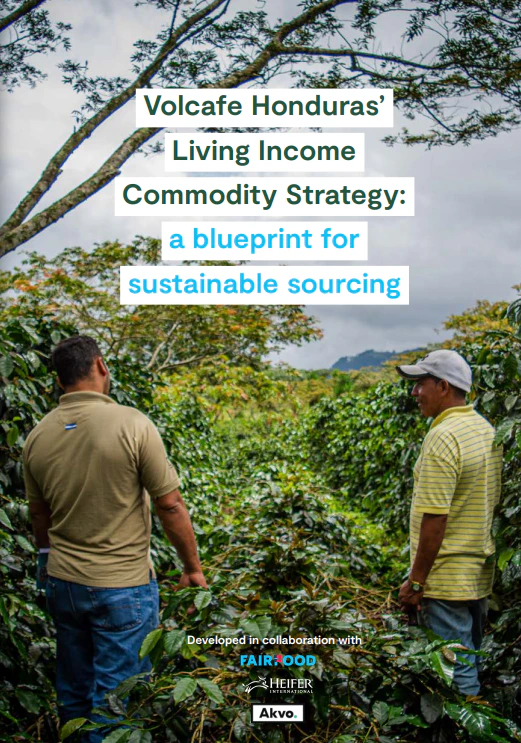
      Applied the Living Income Price (LIP) and Cost–Yield Efficiency (CYE) tools with Molinos de Honduras (Volcafe) to map cost drivers, inefficiencies, and opportunities among supplier farmers.
    </div>

    <div>
      <span>
        <span className="font-bold">Outcome:</span> Influenced corporate policy through farmer segmentation as a crucial step in defining targeted interventions with clear KPIs and objectives, highlighting gender-based cost differences and efficiency gaps.
      </span>
    </div>
  </div>
</div>

**Use:** The study validated results with 30 farmers during the *Laboratorio de Ingreso Digno*, fostering data ownership and integrating findings into the “Volcafe Way” farmer support programme to close income gaps.\
**Special feature:** Direct private-sector integration, with recommendations embedded into ongoing supplier programmes.
<a href="https://fairfood.org/app/uploads/2025/09/Fairfood-Molinos-Heifer-Living-Income-Commodity-Strategy.pdf" target="_blank" rel="noopener noreferrer" className="inline-flex items-center gap-2 rounded-md border border-gray-300 px-4 py-2 text-sm leading-tight font-medium transition-colors hover:bg-gray-50 dark:hover:bg-gray-900 focus-visible:outline-none focus-visible:ring-2 focus-visible:ring-gray-300">
  Access it
</a>

### 2. **Sierra Leonean cocoa**

<div className="flex flex-col md:flex-row w-full items-stretch">
  <div className="w-full md:basis-1/2 md:flex-none">
    {/* Mobile gets a stable box; desktop centers image within column */}

    <div className="flex items-center justify-center bg-gray-50" style={{ aspectRatio: '2 / 3' }}>
      <img src="https://mintcdn.com/liptoolkit/r1L3ow9joDO4XpQM/images/resource-2.png?fit=max&auto=format&n=r1L3ow9joDO4XpQM&q=85&s=014df564f0a82343c75146196f3ae762" alt="Portrait" className="block max-w-full max-h-full object-contain" loading="lazy" width="1062" height="1510" data-path="images/resource-2.png" />
    </div>
  </div>

  <div className="w-full md:basis-1/2 p-4 flex flex-col justify-center">
    <div className="mb-2">
      Following the creation of the first Living Income Benchmark by KIT in Sierra Leone, we applied the LIP and CYE in the country’s cocoa sector in collaboration with Solidaridad West Africa. Together, Fairfood and Solidaridad collected and analysed farmer-level data in five cocoa-producing districts, with Akvo supporting the identification of four farmer profiles.
    </div>

    <span>
      <span className="font-bold">Outcome:</span> The first district-specific action points for input access, replanting, post-harvest handling, and youth inclusion.
    </span>
  </div>
</div>

**Goal:** Influence national cocoa policy. Findings will inform the Ministry of Agriculture and Produce Monitoring Board to engage the private sector on fair pricing.\
**Special feature:** National policy relevance, creating an evidence base for systemic interventions in an emerging sustainable cocoa market. The study was peer reviewed by the Produce Monitoring Board and the Sierra Leonean Ministry of Agriculture.

<a href="https://fairfood.org/app/uploads/2025/11/Fairfood-Solidaridad-living-income-price-Sierra-Leone-cocoa.pdf" target="_blank" rel="noopener noreferrer" className="inline-flex items-center gap-2 rounded-md border border-gray-300 px-4 py-2 text-sm leading-tight font-medium transition-colors hover:bg-gray-50 dark:hover:bg-gray-900 focus-visible:outline-none focus-visible:ring-2 focus-visible:ring-gray-300">
  Access it
</a>

### 3. **Ugandan coffee**

<div className="flex flex-col md:flex-row w-full items-stretch">
  <div className="w-full md:basis-1/2 md:flex-none">
    {/* Mobile gets a stable box; desktop centers image within column */}

    <div className="flex items-center justify-center bg-gray-50" style={{ aspectRatio: '2 / 3' }}>
      <img src="https://mintcdn.com/liptoolkit/imnfLdhrt91Rk5qO/images/resource-3.png?fit=max&auto=format&n=imnfLdhrt91Rk5qO&q=85&s=5ad254550162a207693c34d1875aab56" alt="Portrait" className="block max-w-full max-h-full object-contain" loading="lazy" width="564" height="787" data-path="images/resource-3.png" />
    </div>
  </div>

  <div className="w-full md:basis-1/2 p-4 flex flex-col justify-center">
    <div className="mb-2">
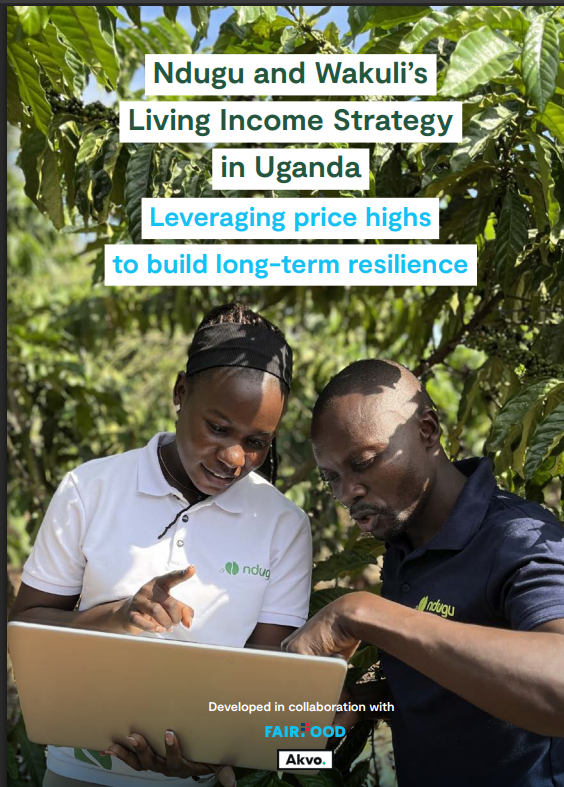
      Uganda became the third live use case of the Farmer Income Data Toolkit in 2025. Together with Ndugu Coffee Farmers and Wakuli, Fairfood and Akvo applied the Living Income Price (LIP) tool alongside a farmer segmentation process to understand income gaps among Robusta producers.
    </div>

    <span>
      <span className="font-bold">Outcome:</span> The analysis enabled partners to identify which interventions are needed — and for which farmer groups — to close the living income gap. A new addition tested in Uganda was price modelling, used to show how income levels could fall short under different price fluctuation scenarios.
    </span>
  </div>
</div>

**Context:** Uganda has now surpassed Ethiopia as Africa’s largest coffee exporter, driven by record-high Robusta prices. Yet higher prices alone do not guarantee viable livelihoods, making data-led decision-making critical in a volatile market.\
**Special feature:** Forward-looking price modelling integrated into living income analysis, supporting farmer-first sourcing decisions that remain robust amid market volatility.\
**Use:** Findings are informing a new programme run by Fairfood, Wakuli and Ndugu with support from the Due Diligence Fund. The goal is to have data guiding discussions, sourcing strategies, and intervention design with the ambition to make Robusta coffee a viable and attractive livelihood  and to demonstrate what farmer-first sourcing looks like in practice.

<a href="https://fairfood.org/app/uploads/2026/02/Fairfood-Ndugu-Wakuli-Uganda-case-study.pdf" target="_blank" rel="noopener noreferrer" className="inline-flex items-center gap-2 rounded-md border border-gray-300 px-4 py-2 text-sm leading-tight font-medium transition-colors hover:bg-gray-50 dark:hover:bg-gray-900 focus-visible:outline-none focus-visible:ring-2 focus-visible:ring-gray-300">
  Access it
</a>

### 4. **Coming soon:**

The approach is being tested across different projects and programmes. This repository is expected to soon include findings from other projects, including:

* Uganda: Coffee (Wakuli), continuation of Ndugu via GIZ Due Diligence Fund (2025-2026)
* Uganda: Coffee (Ugacof), Developed within the EIT Food program (2025-2027)
* India: Spices, developed within the Social Sustainability Fund (SSF)
* Ghana: Shea, developed within the Social Sustainability Fund (SSF), together with Solidaridad West Africa

<a href="https://share.hsforms.com/1rMVDK46BTceWoYKcVLKOyA14ju5" target="_blank" rel="noopener noreferrer" className="inline-flex items-center gap-2 rounded-md border border-gray-300 px-4 py-2 text-sm leading-tight font-medium transition-colors hover:bg-gray-50 dark:hover:bg-gray-900 focus-visible:outline-none focus-visible:ring-2 focus-visible:ring-gray-300">
  Register to be updated about new cases and events
</a>
